
URBALTOUR
Urbanization and Tourism in the Highlands
Examining the intersections of urbanization and tourism in mountainous and highland regions across South and Southeast Asia
About the Project
URBALTOUR is a multi-sited research project examining the complex intersections of urbanization and tourism in mountainous and highland regions across South and Southeast Asia. Funded by the French National Agency for Research (ANR), the project is a collaborative initiative coordinated by the French Institute of Pondicherry (IFP) in partnership with various international institutions, including The Highland Institute.
The project investigates how tourism is reshaping urban development, governance structures, and socio-economic dynamics in highland contexts. Through comparative analysis across multiple sites, URBALTOUR explores how tourism-driven urbanization creates new opportunities and challenges for mountain communities, local economies, and environmental sustainability.
Kohima, the capital of Nagaland in Northeast India, serves as one of the primary analytical sites within the larger URBALTOUR framework. The Highland Institute leads research activities in Kohima, examining the city's transformation from a military and administrative center into an emerging tourism hub, particularly through the lens of the internationally renowned Hornbill Festival.
Focus on Kohima
Historical Transformation
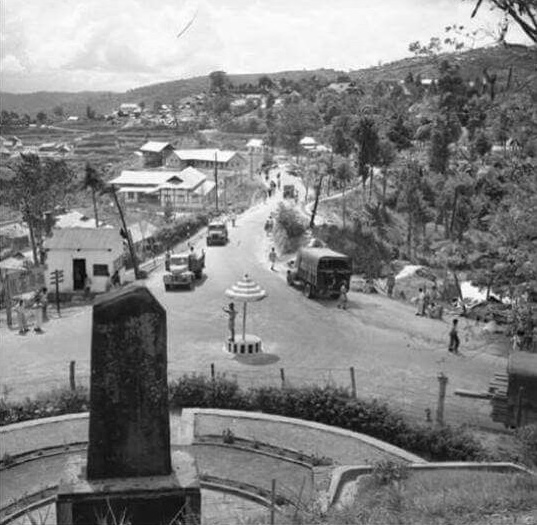
Kohima's urban trajectory reflects a remarkable transformation. Originally established as a military garrison and administrative center during British colonial rule, the city has evolved into a vibrant tourism destination, particularly following Nagaland's statehood in 1963.
The launch of the Hornbill Festival in 2000 marked a pivotal moment in Kohima's development, catalyzing infrastructure growth, hospitality sector expansion, and increased visitor footfall. Today, the city experiences an annual influx of domestic and international tourists, fundamentally reshaping its economic base, spatial organization, and social fabric.
Key Research Dimensions
Infrastructure & Development
Examining the rise of homestays, hotels, and hospitality infrastructure, alongside constraints in water supply, waste management, and transportation networks.
Stakeholder Engagement
Interviews with government departments, village councils, hospitality sector operators, and tourists to understand diverse perspectives and decision-making processes.
Environmental Pressures
Analyzing the ecological impacts of tourism growth, including waste generation, water scarcity, traffic congestion, and strain on natural resources.
Sustainable Tourism
Exploring pathways toward year-round, sustainable tourism strategies that reduce dependence on the Hornbill Festival and create equitable economic opportunities.
Research Themes
Tourism as a catalyst for innovative urban development patterns, spatial configurations, and regional connectivity in highland contexts
Transformations in governance structures, public action frameworks, and urban planning processes shaped by tourism development
Analysis of hospitality sector growth, market dynamics, service quality standards, and socio-economic inequalities
Social and environmental consequences of rapid tourism growth, including resource management and ecological sustainability
Livelihoods, entrepreneurship opportunities, and women-led initiatives in the tourism and hospitality sectors
Relationships between Kohima and surrounding villages, examining flows of people, resources, and cultural practices
Research Methods
The URBALTOUR project in Kohima employs a multi-method approach combining qualitative and quantitative research techniques to capture the complexity of tourism-driven urbanization:
Semi-Structured Interviews
In-depth conversations with government officials, municipal authorities, village council representatives, hospitality sector operators, and community stakeholders to understand decision-making processes, challenges, and aspirations.
Surveys & Questionnaires
Systematic data collection from hotels, homestays, restaurants, vendors, and tourists to quantify service provision, visitor profiles, economic flows, and satisfaction levels.
GIS-Based Spatial Analysis
Geographic information systems mapping of tourism infrastructure, hospitality facilities, transportation networks, and urban growth patterns to visualize spatial transformations.
Multi-Year Fieldwork
Longitudinal research activities conducted between 2022 and 2025, allowing for temporal analysis of changes, seasonal variations, and evolving dynamics in Kohima's tourism sector.
Research Team
International Lead
Dr. Bertrand Lefebvre
Project Lead & Principal Investigator
French Institute of Pondicherry (IFP)
Dr. Lefebvre is a geographer and urban researcher specializing in South and Southeast Asian urbanization processes. He coordinates the multi-sited URBALTOUR project and leads comparative research on tourism-driven urban transformations across highland regions.
Highland Institute Team (Kohima Site)
Rovithono Yhome
Senior Researcher
The Highland Institute
Rovithono Yhome leads field research activities in Kohima, conducting stakeholder interviews, coordinating surveys, and analyzing urban governance and planning dimensions of tourism development. Her work focuses on municipal responses to tourism growth and infrastructure challenges.
Akumtong Imchen
Researcher
The Highland Institute
Akumtong Imchen contributes to data collection, spatial mapping, and analysis of hospitality sector dynamics. His research examines the role of homestays, women-led entrepreneurship, and community participation in Kohima's tourism economy.
The Highland Institute team is supported by administrative staff, field assistants, and research associates who contribute to survey implementation, data processing, and logistical coordination.
Project Partners
French Institute of Pondicherry (IFP)
Lead institution coordinating the multi-sited URBALTOUR research project across South and Southeast Asia
The Highland Institute
Research partner leading field activities, stakeholder engagement, and data collection in Kohima, Nagaland
French National Research Agency (ANR)
Primary funding agency supporting the URBALTOUR research initiative
Local Stakeholders (Kohima)
Municipal authorities, village councils, hospitality sector operators, and community organizations collaborating in research activities
Publications & Outputs
URBALTOUR: Examining the Rise of Tourism in Kohima, Nagaland
The Highlander: A Quarterly Review of Highland Asia (2024)
Comprehensive research article analyzing tourism development patterns, governance challenges, and socio-economic transformations in Kohima. Based on multi-year fieldwork and stakeholder engagement.
Read Full ArticleOn the Field! Kohima with Bertrand Lefebvre, Akumtong Imchen & Rovithono Yhome
URBALTOUR Field Report Blog
Field report documenting research activities, methodological approaches, and preliminary findings from collaborative fieldwork in Kohima. Includes reflections on stakeholder engagement and research challenges.
Read Field ReportURBALTOUR Project Website
Project Hub & Research Updates
Official URBALTOUR project website featuring updates from all research sites, working papers, multimedia content, and project news. Includes comparative insights from highland cities across South and Southeast Asia.
Visit Project WebsiteNote: Additional publications, working papers, policy briefs, and research outputs will be added as the project progresses through 2025. For the latest updates, visit theURBALTOUR project website.