
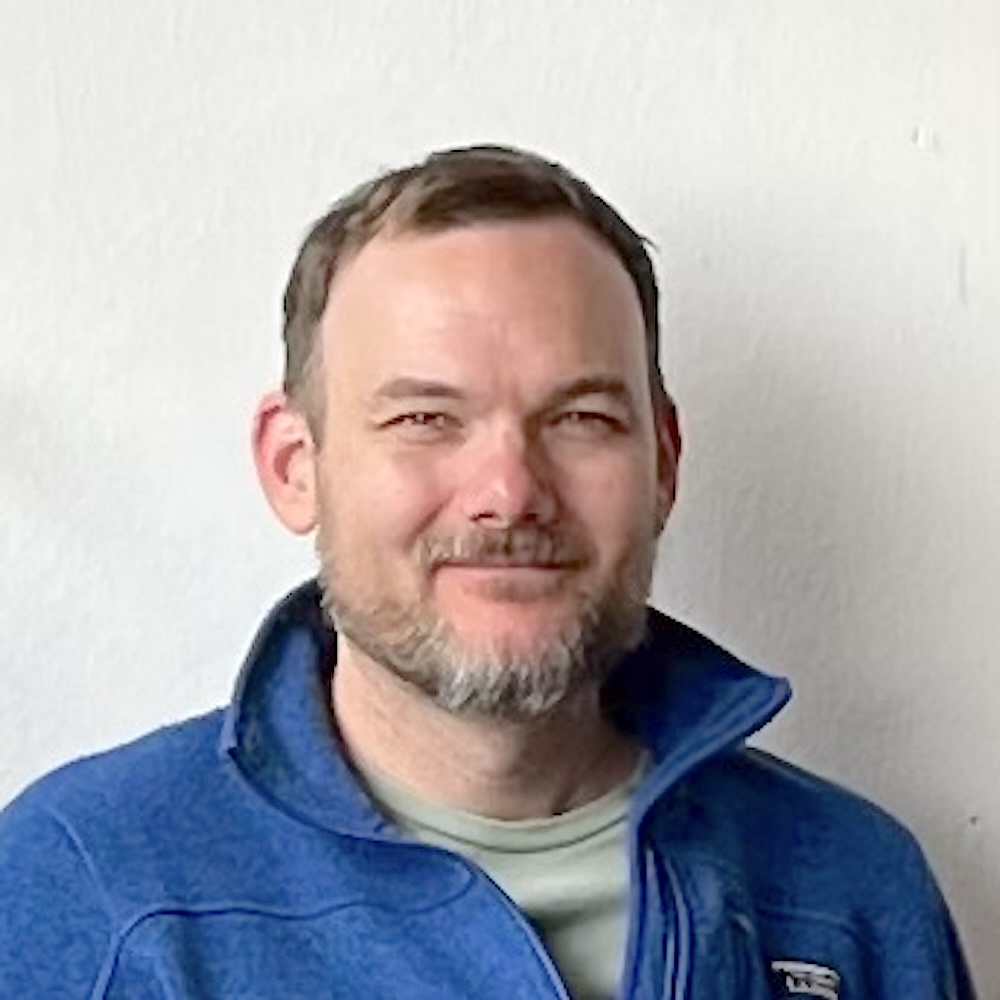
Dr Michael T. Heneise
President
Associate Professor of Religious Studies and Social Anthropology, UiT The Arctic University of Norway; Co-Founder
Intellectual Biography
Michael T. Heneise is a social and cultural anthropologist whose scholarship explores dreams, healing, cosmology, political agency, and the ontological entanglements of human and nonhuman life. His work is grounded in long-term ethnographic engagement in Highland Asia, especially among Naga and Karbi communities, and is informed by earlier experiences in Latin America and the Caribbean, where he first encountered Indigenous traditions of transformation, spirituality, and relational world-making.
He is Associate Professor in the Department of Archaeology, History, and Religious Studies at UiT The Arctic University of Norway, where he teaches across religious studies, anthropology, theory and method, religion and politics, and environmental humanities. He holds a PhD in Social Anthropology from the University of Edinburgh. His doctoral research examined dreams, sovereignty, and prophetic authority among the Nagas, establishing a wider intellectual trajectory concerned with vision, alterity, landscape, and the unstable boundaries between persons, spirits, animals, and place.
Heneise is Co-Founder and President of The Highland Institute in Northeast India, an independent research centre dedicated to long-term, interdisciplinary, and community-engaged scholarship across the eastern Himalayas and the India–Myanmar borderlands. Through the Institute, he has helped build research training initiatives, editorial platforms, and collaborative scholarly infrastructures connecting local knowledge traditions with international academic networks.
His work brings anthropology into sustained dialogue with phenomenology, decolonial and postcolonial theory, medical anthropology, and the anthropology of symbols. Across research, teaching, and institution-building, he is especially interested in how dream narratives, healing practices, animal transformations, and ritual landscapes disclose overlapping ontologies and alternative ways of knowing.
Research Foci & Areas of Work
Michael T. Heneise's research is situated at the intersection of anthropology of religion, phenomenology, Indigenous knowledge studies, and environmental humanities. His work engages especially with dreams, visions, prophecy, healing, sovereignty, medical pluralism, cosmology, and human–nonhuman relations in Highland Asia.
A recurring concern in his scholarship is the extent to which cosmological worlds are not merely symbolic systems, but lived, contested, and embodied realities. His research asks how communities articulate relations among ancestors, spirits, animals, landscapes, and political authority, and how such relations shape questions of illness, ritual, kinship, ecology, and historical change.
Key areas of work include:
- •Anthropology of dreams, visions, and prophecy
- •Indigenous cosmologies and knowledge systems
- •Medical anthropology and medical pluralism
- •Phenomenology and eco-phenomenology
- •Religion, politics, and sovereignty in Highland Asia
- •Human–nonhuman relations, transformation, and ontological plurality
- •Decolonial methods and community-engaged research
- •Environmental humanities in highland and Arctic contexts
Highland Institute Projects
At The Highland Institute, Michael T. Heneise has contributed to the development of long-term research infrastructures linking scholarship, publication, research training, and community engagement. His institutional work has focused on building interdisciplinary and transregional initiatives rooted in Highland Asia while remaining in dialogue with wider debates in anthropology, religious studies, and the environmental humanities.
He is Principal Investigator of Ekologos – Global Environmental Humanities: Indigenous Knowledge about Environmental Change, an international collaboration anchored at UiT and developed with partners in India, Brazil, and Sápmi. The project examines Indigenous knowledge, sustainability, and environmental change across highland, Arctic, and marine worlds.
He has also played a leading role in shaping the Institute's postgraduate research training initiatives, including the development of a postgraduate certificate programme designed to strengthen methodological, editorial, and analytical capacity among early-career scholars in Northeast India. His broader contributions include research mentorship, editorial development, institutional partnerships, and the cultivation of decolonial scholarly platforms responsive to local knowledge traditions and regional histories.
Selected Publications & Knowledge Outputs
Selected books and edited volumes:
- Agency and Knowledge in Northeast India: The Life and Landscapes of Dreams (Routledge, 2019)
- The Routledge Handbook of Highland Asia, co-edited with Jelle J. P. Wouters (Routledge, 2023)
- The Routledge Handbook of Eco-Phenomenology, co-edited with Cassandra Falke, Espen Dahl, Alice Sundman, and Edvard Lia (Routledge, 2026)
- Nagas in the 21st Century, co-edited with Jelle J. P. Wouters (Highlander Books, 2017)
- Passing Things On: Ancestors and Genealogies in Northeast India, edited volume (Heritage Publishing House, 2015)
His articles and chapters address dreaming, healing, cosmopolitics, eco-phenomenology, religious change, and contemporary Naga thought across journals, companions, handbooks, and edited collections.
Public Engagement, Teaching & Community Work
Alongside his research, Michael T. Heneise is committed to teaching, mentorship, and public scholarship. At UiT, he teaches across bachelor's, master's, and teacher-education programmes in religious studies, including courses on religion and politics, South and East Asian religions, theory and method, environmental humanities, and anthropological approaches to religion and society.
His work also extends beyond the university classroom. Through The Highland Institute, he has supported early-career researchers, contributed to editorial and publication initiatives, developed collaborative workshops and postgraduate programmes, and participated in wider public conversations on religion, sustainability, Indigenous knowledge, and the humanities. He is also a contributor to public-facing intellectual forums and interdisciplinary dialogues connecting anthropology, philosophy, religion, and contemporary social life.
Contact & Scholarly Infrastructure
Institutional Affiliation
Department of Archaeology, History, and Religious Studies
UiT The Arctic University of Norway
Postboks 6050 Langnes
9037 Tromsø, Norway
Professional Roles
- •President and Co-Founder, The Highland Institute
- •Associate Professor, UiT The Arctic University of Norway
- •Editor-in-Chief, HIMALAYA: Journal of the Association for Nepal and Himalayan Studies
- •Co-Founder, Highlander Journal
- •Co-Founder, Highlander Press
Scholarly Profiles
This profile forms part of The Highland Institute's living scholarly archive, documenting research trajectories, collaborative commitments, and the intellectual work shaping the Institute's wider academic community.